2026 Futuriom 50: Highlights →Explore

STRUCTURED THREAT INTELLIGENCE FOR THE CLOUD COMMUNITY

Aviatrix Threat Research Center

Cloud breaches are accelerating — across identities, workloads, supply chains, and cloud-native services.

The Aviatrix Threat Research Center provides security teams with:

  • A clear structured understanding of how these breaches unfolded.
  • What attackers exploited.
  • Where runtime control principles have broken the breach chain.
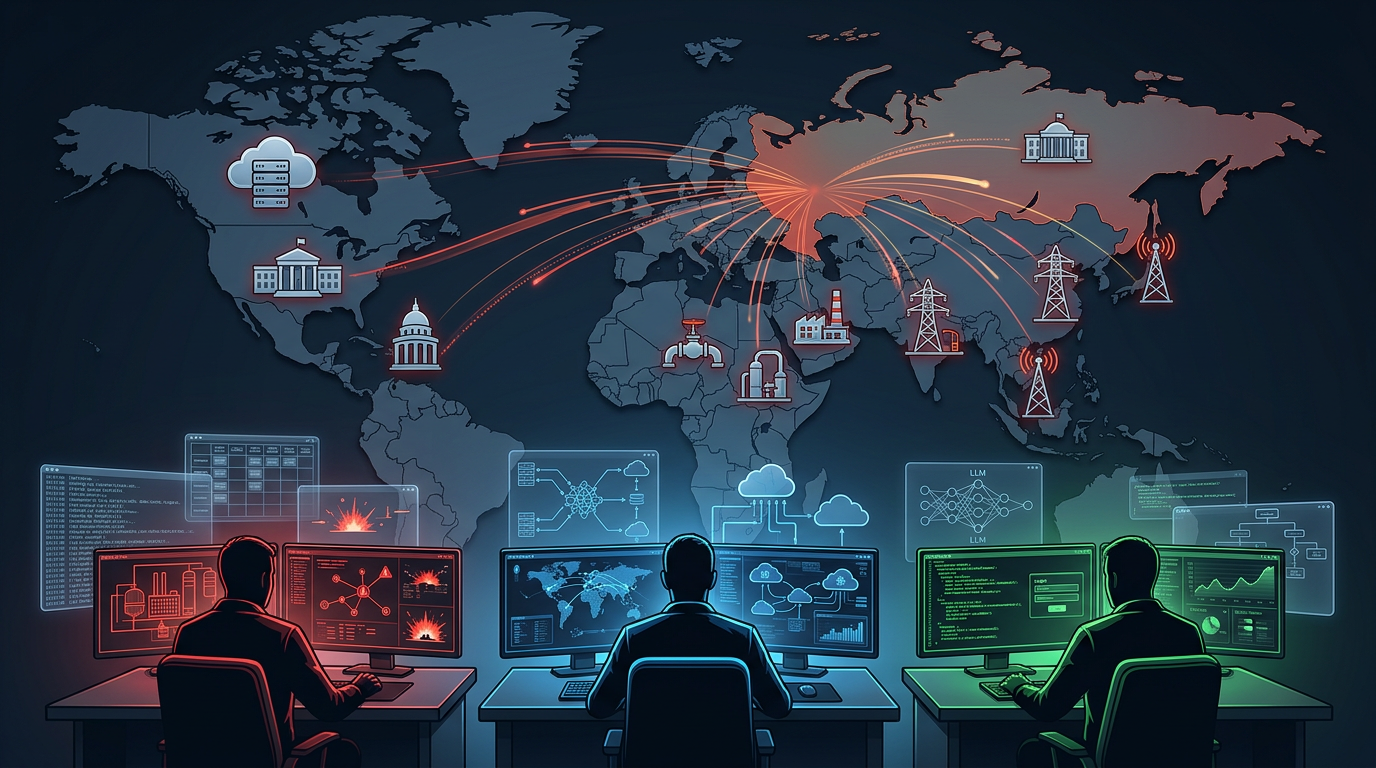
Graphic-for-second-Salt-Typhoon-blog-2

Recent Breaches, Security Incidents & Vulnerabilities

A unified view of real-world cloud threats — combining AI-powered analysis, security research, and expert perspectives through a consistent, cloud-specific framework.

AI-Powered Threat Analysis

Agentic AI that analyzes real-world attacks — across security incidents, breaches, and exploited vulnerabilities — to produce structured, actionable intelligence.

Impact (HIGH)
FrostArmada: Unveiling APT28's DNS Hijacking Tactics Targeting Microsoft 365
In April 2026, an international law enforcement operation, in collaboration with private companies, successfully disrupted 'FrostArmada,' a cyber espionage campaign orchestrated by the Russian state-sponsored group APT28 (also known as Fancy Bear or Forest Blizzard). The campaign involved compromising small office/home office (SOHO) routers, primarily from MikroTik and TP-Link, to alter DNS settings and redirect traffic through attacker-controlled servers. This allowed APT28 to intercept authentication traffic and steal Microsoft 365 credentials and OAuth tokens. At its peak in December 2025, FrostArmada infected 18,000 devices across 120 countries, targeting government agencies, law enforcement, IT and hosting providers, and organizations operating their own servers. The operation to neutralize the malicious infrastructure was supported by Microsoft, Lumen's Black Lotus Labs, the FBI, the U.S. Department of Justice, and the Polish government. ([bleepingcomputer.com](https://www.bleepingcomputer.com/news/security/authorities-disrupt-dns-hijacks-used-to-steal-microsoft-365-logins/?utm_source=openai)) This incident underscores the evolving tactics of state-sponsored threat actors in exploiting network infrastructure vulnerabilities to conduct large-scale credential theft. The use of DNS hijacking via compromised routers highlights the need for organizations to secure network devices, implement robust monitoring, and adopt zero-trust principles to mitigate such sophisticated attacks.

9 hours ago

Kill Chain at a Glance
IC
Initial Compromise (high)
PE
Privilege Escalation (high)
LM
Lateral Movement (medium)
C&C
Command & Control (high)
E
Exfiltration (high)
I
Impact (medium)
Impact (CRITICAL)
Flowise 2026 RCE Vulnerability Exploitation
In April 2026, security researchers identified active exploitation of a critical remote code execution (RCE) vulnerability, CVE-2025-59528, in Flowise, an open-source platform for building AI agents and large language model (LLM) workflows. This flaw, residing in the CustomMCP node, allows attackers to execute arbitrary JavaScript code without security validation, leading to potential full system compromise. Despite a patch being available since September 2025, many instances remain unpatched, exposing organizations to significant risks. ([bleepingcomputer.com](https://www.bleepingcomputer.com/news/security/max-severity-flowise-rce-vulnerability-now-exploited-in-attacks/?utm_source=openai)) The exploitation of this vulnerability underscores the persistent threat posed by unpatched software in widely used AI development tools. Organizations leveraging Flowise must prioritize immediate updates to mitigate potential breaches and safeguard sensitive data. ([bleepingcomputer.com](https://www.bleepingcomputer.com/news/security/max-severity-flowise-rce-vulnerability-now-exploited-in-attacks/?utm_source=openai))

9 hours ago

Kill Chain at a Glance
IC
Initial Compromise (high)
PE
Privilege Escalation (medium)
LM
Lateral Movement (medium)
C&C
Command & Control (medium)
E
Exfiltration (medium)
I
Impact (medium)
Impact (MEDIUM)
Snowflake Data Breach 2026: Lessons in Third-Party Integration Security
In April 2026, over a dozen companies experienced data theft attacks following a breach at a SaaS integration provider, leading to the theft of authentication tokens. The majority of these attacks targeted Snowflake, a cloud-based data platform. Snowflake detected unusual activity in a small number of customer accounts linked to a specific third-party integration and promptly initiated an investigation, securing the affected accounts and notifying impacted customers. The attacks did not involve any vulnerability or compromise of Snowflake's systems. The ShinyHunters extortion group claimed responsibility for the attacks, stating they had stolen data from dozens of companies and were demanding ransom payments to prevent the release of the stolen data. The group also attempted to steal data from Salesforce but were thwarted by AI detection mechanisms. This incident underscores the critical importance of securing third-party integrations and the growing threat posed by sophisticated cybercriminal groups like ShinyHunters.

9 hours ago

Kill Chain at a Glance
IC
Initial Compromise (high)
PE
Privilege Escalation (high)
LM
Lateral Movement (medium)
C&C
Command & Control (medium)
E
Exfiltration (high)
I
Impact (high)
Impact (CRITICAL)
Storm-1175's Rapid Exploitation of Zero-Days Leads to Medusa Ransomware Attacks
In early April 2026, the China-based cybercriminal group Storm-1175 executed a series of high-velocity attacks targeting vulnerable internet-facing systems across sectors such as healthcare, education, professional services, and finance in Australia, the United Kingdom, and the United States. By exploiting a combination of zero-day and N-day vulnerabilities, including CVE-2025-10035 in Fortra's GoAnywhere MFT and CVE-2026-23760 in SmarterMail, the group rapidly gained initial access. Post-compromise activities involved deploying web shells, creating new user accounts, and utilizing remote monitoring and management tools like SimpleHelp and MeshAgent for persistence and lateral movement. Within as little as 24 hours, Storm-1175 exfiltrated data and deployed Medusa ransomware, leading to significant operational disruptions for the affected organizations. ([microsoft.com](https://www.microsoft.com/en-us/security/blog/2026/04/06/storm-1175-focuses-gaze-on-vulnerable-web-facing-assets-in-high-tempo-medusa-ransomware-operations/?utm_source=openai)) This incident underscores the increasing sophistication and speed of financially motivated threat actors in exploiting newly disclosed vulnerabilities. The rapid transition from initial access to ransomware deployment highlights the critical need for organizations to promptly apply security patches, monitor for unauthorized activities, and implement robust incident response strategies to mitigate such high-tempo cyber threats.

10 hours ago

Kill Chain at a Glance
IC
Initial Compromise (high)
PE
Privilege Escalation (high)
LM
Lateral Movement (high)
C&C
Command & Control (high)
E
Exfiltration (high)
I
Impact (high)
Impact (CRITICAL)
Iranian Hackers Exploit PLC Vulnerabilities in U.S. Critical Infrastructure
In March 2026, Iranian-affiliated Advanced Persistent Threat (APT) actors initiated cyberattacks targeting internet-exposed Rockwell/Allen-Bradley programmable logic controllers (PLCs) within U.S. critical infrastructure sectors, including Government Services, Water and Wastewater Systems, and Energy. These attacks involved unauthorized access to PLCs, manipulation of project files, and alteration of data displayed on Human-Machine Interface (HMI) and Supervisory Control and Data Acquisition (SCADA) systems, leading to operational disruptions and financial losses. This incident underscores the escalating cyber threat landscape, particularly in the context of geopolitical tensions. Organizations must prioritize securing internet-facing operational technology assets to mitigate risks associated with state-sponsored cyber activities.

10 hours ago

Kill Chain at a Glance
IC
Initial Compromise (high)
PE
Privilege Escalation (medium)
LM
Lateral Movement (medium)
C&C
Command & Control (medium)
E
Exfiltration (medium)
I
Impact (high)

View All Threats

Browse 2931+ threat reports , deep-dives, and threat intelligence updates.

Browse All

Security Research & Insights

Security Research & Insights with human-led deep dives into campaigns and cloud-native TTPs

Aviatrix
Deafult Blog Image
    AVX-SEC-2026-003: LiteLLM Security Advisory

    Apr 01, 2026

    By Matt Snyder

    Aviatrix
    russia
      The Russian APT Playbook - Operational Evolution and Defensive Strategy (2021 - 2026)

      Mar 31, 2026

      By Deepak Mangipudi

      Aviatrix
      DPKR
        The DPRK APT Playbook - Operational Evolution and Defensive Strategy (2021-2026)

        Mar 19, 2026

        By Deepak Mangipudi

        Market Perspectives

        Market Perspectives offering expert commentary and select breach analysis from industry leaders

        Aviatrix
        What Could Have Stopped the 2023 MGM Breach? A Study in the Power of Embedded Zero Trust

        Jul 31, 2025

        By John Qian

        Aviatrix
        The Zero Trust Gap: Only 8% of US Enterprises Use Zero Trust Architectures

        Jul 23, 2025

        By Scott Leatherman

        Aviatrix
        HITRUST CSF Compliance in the Cloud—How Aviatrix Secures Healthcare Data

        Jun 25, 2025

        By Tom Davis

        How CNSF Protects Cloud Workloads

        Cloud attackers don’t rely on a single exploit — they rely on paths.

        Once inside, attackers move laterally between workloads, establish egress command-and-control, and exfiltrate data through legitimate cloud services. These behaviors happen at runtime, across accounts, regions, and clouds — often beyond the visibility and control of perimeter and posture-based tools.

        Aviatrix Cloud Native Security Fabric (CNSF) protects cloud environments by embedding visibility and enforcement directly into workload communication paths, enabling organizations to see and control how workloads interact while applications are running.

        Utilize the Network Layer

        With CNSF, enterprises can:

        • Detect and constrain attack paths at runtime

          Gain visibility into east-west and egress workload communication and apply controls that limit lateral movement, unauthorized egress, and uncontrolled trust expansion.

        • Eliminate blind spots in workload-to-workload traffic

          Observe traffic across VPCs/VNets, regions, and cloud providers using cloud native telemetry — including paths that posture tools and point controls don’t model.

        • Secure modern and AI-driven workloads

          Understand how agents, services, and workloads communicate at runtime, and enforce policy to reduce the risk of misuse, over-privileged access, or unintended data flows.

        • Apply consistent Zero Trust controls without slowing teams

          Enforce segmentation, egress control, and encryption centrally across clouds — without agents, application changes, or developer friction.

        See Your Attack Paths. Close the Gaps with CNSF.

        Workload attack paths aren’t visible from posture alone.

        Most cloud security tools focus on configuration and exposure. They don’t reveal how workloads actually communicate at runtime — or how those communication paths can be chained together by attackers for lateral movement, command-and-control, and data exfiltration.

        The Executive Assistant That Broke the Company Why Shadow AI is the New Cloud Crisis card image

        Your assessment delivers:

        • The Aviatrix Workload Attack Path Assessment (WAPA) analyzes real workload communication using cloud native telemetry to uncover attack paths already present in your environment — and shows how Cloud Native Security Fabric (CNSF) can break those paths with runtime enforcement.

        Secure The Connections Between Your Clouds and Cloud Workloads

        Leverage a security fabric to meet compliance and reduce cost, risk, and complexity.

        Cta pattren Image